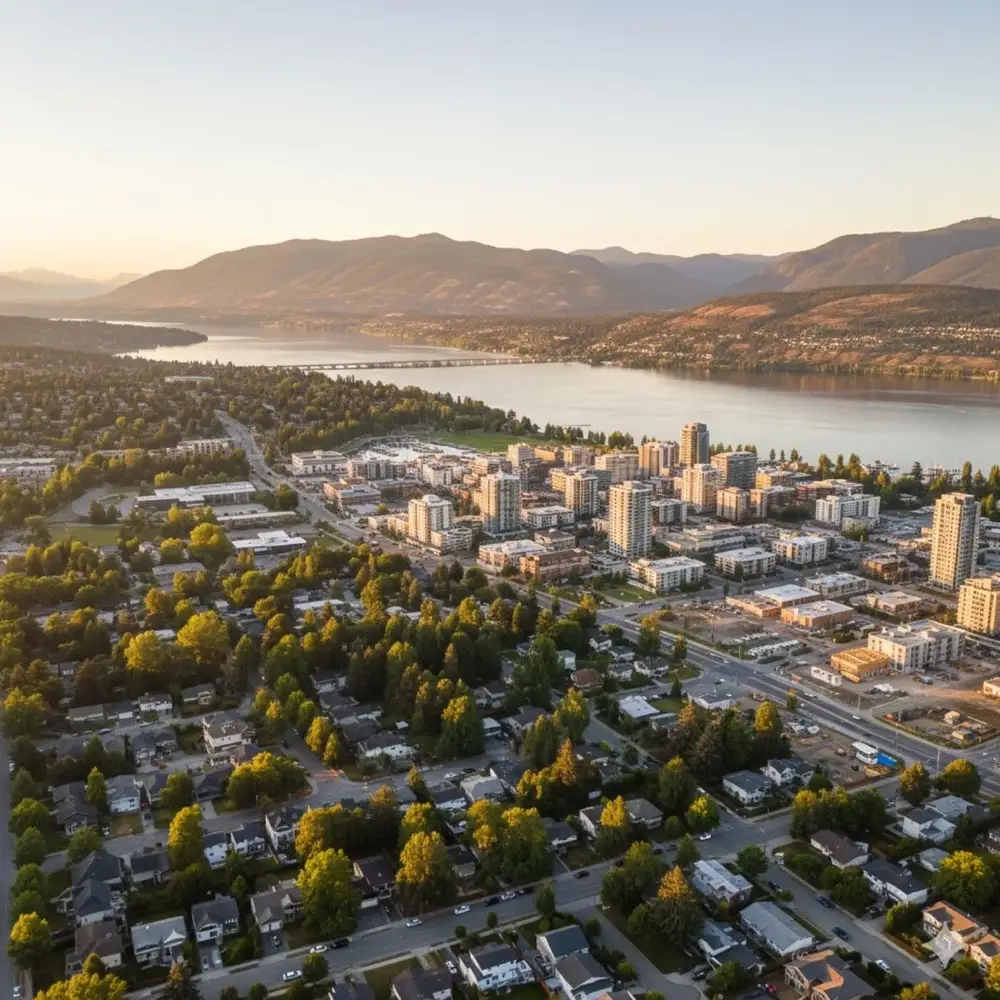
Okanagan Real Estate Market Update: February 2026
What's happening in Kelowna, West Kelowna, and Lake Country real estate—prices, inventory, trends, and what it means for buyers and sellers right now.
~8 mo
Inventory
$985K
Benchmark SFH
52
Avg Days on Market
-3.2%
YoY Price Change

Giuseppe Gaspari
REALTOR® | Okanagan Real Estate Specialist
Helping families find their perfect Okanagan home since 2018
Last updated: February 2026
February 2026 Market Snapshot
The Okanagan real estate market has shifted significantly from the frenzy of 2021-2022. We're now in what I'd call a "buyer-friendly balanced market"—not a crash, but a return to sanity where buyers have leverage, properties need to be priced right, and patience is rewarded.
The bottom line: More inventory means more choice for buyers. Longer days on market means sellers need realistic pricing. And prices, while down from the peak, remain well above pre-pandemic levels.
Current Home Prices by Area
Prices vary significantly across the Okanagan. Here's what you can expect to pay as of February 2026, based on recent sales data from the Association of Interior REALTORS.
| Property Type | Kelowna | West Kelowna | Lake Country |
|---|---|---|---|
| Single Family Home | $985,000 | $875,000 | $920,000 |
| Townhome | $685,000 | $625,000 | $650,000 |
| Condo/Apartment | $485,000 | $425,000 | $450,000 |
*Benchmark prices based on MLS HPI data. Actual prices vary by neighbourhood, condition, and features. Contact me for a detailed analysis of your specific area.
Price Softening
Prices are down 5-10% from the 2022 peak across most property types. Luxury properties ($1.5M+) and rural acreages have seen the largest adjustments.
Still Above Pre-Pandemic
Despite the correction, prices remain 30-50% above 2019 levels. If you bought before 2020, you're still well ahead—even if it doesn't feel that way.
Inventory & Days on Market
The biggest shift from 2021-2022 is inventory. We went from a market where 50 buyers competed for every listing to one where buyers can actually take their time and negotiate.
What the Numbers Mean
- Under 4 months of inventory: Seller's market. Multiple offers, quick sales, limited negotiation.
- 4-6 months: Balanced market. Fair negotiations, reasonable timelines.
- Over 6 months: Buyer's market. More negotiating power, conditions accepted, price reductions common.
At roughly 8 months of inventory, the Central Okanagan is firmly in buyer-friendly territory. This doesn't mean sellers can't succeed—it means they need to be realistic about pricing and presentation.
Days on Market by Property Type
Average days on market has increased across the board:
- Condos: 45-55 days (up from ~20 in 2021)
- Townhomes: 50-60 days
- Single Family: 55-70 days
- Luxury ($1.5M+): 90-120+ days

The Okanagan remains one of Canada's most desirable real estate markets
Interest Rates: The Elephant in the Room
Interest rates are the single biggest factor affecting the 2026 market. The Bank of Canada has begun easing rates from their 2023 peak, but we're still well above the ultra-low rates of 2020-2021.
Rate Impact on Buying Power
Same $3,000/month payment at different rates:
This reduced buying power is exactly why prices have softened. Buyers simply can't pay 2022 prices at 2026 rates. As rates continue to ease, expect some upward pressure on prices—but we're unlikely to return to the frenzy anytime soon.
What Buyers Should Know Right Now
This is the best buyer's market since before the pandemic. Here's how to take advantage of it.
You have leverage—use it
Sellers are negotiating. Price reductions are common. Offers below asking are being accepted. Don't be afraid to negotiate.
Conditions are back
Unlike 2021 when buyers waived everything, you can now include financing and inspection conditions. Protect yourself.
Take your time
Properties aren't selling in hours anymore. You can view multiple times, sleep on it, and make thoughtful decisions.
Watch for motivated sellers
Price reductions, extended days on market, and vacant properties often signal flexibility. Your agent can identify these opportunities.
Get rate-locked pre-approval
Lock in a rate for 90-120 days. If rates drop, you can renegotiate. If they rise, you're protected.
Consider future rate drops
If you buy now at a higher rate, you can refinance when rates drop. You're locking in the price, not necessarily the rate forever.
Ready to explore what's available?
I can set you up with personalized listing alerts for properties that match your criteria—before they hit the public sites.
What Sellers Should Know Right Now
Selling in 2026 requires a different approach than 2021. Here's the honest truth about what it takes to succeed.
Pricing is everything
Overpriced homes sit. Every week on market reduces your final sale price. Price accurately from day one based on recent comparable sales—not what your neighbour got in 2022.
Preparation matters more than ever
With more inventory, buyers are picky. Declutter, deep clean, make repairs, and consider staging. First impressions determine whether you get a second showing.
Professional marketing is non-negotiable
Phone photos don't cut it. Professional photography, video tours, and strategic online marketing are the minimum. Your listing is competing with hundreds of others.
Expect negotiations
Buyers have options. Be prepared for offers below asking, requests for repairs, and longer conditional periods. Flexibility often beats holding out for perfection.
Timeline has changed
Expect 45-60 days on market for a well-priced home, longer for premium properties. Plan accordingly if you're coordinating a purchase.
You're still ahead if you bought before 2020
Prices are down from peak but up 30-50% from pre-pandemic. Perspective matters. You likely have significant equity even in this market.
Market Conditions by Neighbourhood
Not all areas are performing equally. Here's what I'm seeing in specific Kelowna neighbourhoods.
Lower Mission
Premium lakefront properties holding value. Entry-level condos seeing more negotiation room.
Upper Mission
Higher-end homes facing longer days on market. Wildfire interface concerns affecting some buyers.
Kettle Valley
Family-friendly appeal keeps demand steady. New inventory being absorbed at reasonable pace.
Rutland
Best value in Kelowna proper. First-time buyers finding opportunities under $800K.
Downtown
Condo oversupply in some buildings. Well-located units still moving; dated buildings struggling.
Glenmore
Suburban appeal holding steady. Families attracted to schools and golf course proximity.
Detailed neighbourhood guides:

Finding the right home takes time—but the current market gives buyers that flexibility
Market by Property Type
Condos & Apartments
Most inventory pressure is in the condo market. Some buildings have multiple units listed simultaneously. Buyers can be selective about building age, strata fees, and amenities. Well-located newer condos still move; older buildings with deferred maintenance struggle.
Townhomes
The sweet spot for many buyers—more space than condos, more affordable than houses. Inventory is moderate. Family-friendly complexes in Kettle Valley, Glenmore, and Lake Country see steady demand. Prices have held better than condos.
Single Family Homes
Inventory up significantly from 2021. Entry-level homes ($800K-$1M) in areas like Rutland and Glenmore seeing activity. Upper Mission and Lower Mission luxury taking longer to sell. Acreages and rural properties facing the longest days on market.
Luxury ($1.5M+)
The most challenging segment. Fewer buyers at this price point, longer days on market (90-120+), and more significant price negotiations. Sellers in this range need exceptional patience and realistic pricing.
What to Expect Through 2026
Predicting real estate markets is humbling work. That said, here's my read based on current data and trends.
Short-Term (Next 6 Months)
- Prices likely to remain relatively flat with possible modest gains if rates continue easing
- Spring will bring more inventory and more buyers—typical seasonal pattern
- Well-priced homes in desirable areas will sell; overpriced homes will sit
Medium-Term (6-12 Months)
- Rate cuts should bring more buyers back to the market
- Inventory may tighten slightly as buyer activity increases
- Price appreciation likely to be modest (2-5%) rather than dramatic
Long-Term Fundamentals
- Okanagan remains one of Canada's most desirable lifestyle destinations
- Limited land supply constrains new development
- Continued interprovincial migration from Alberta, Ontario, and other provinces
- These factors support long-term value even through market cycles
My honest take: We're not going back to 2021 anytime soon. But we're also not in a crash. This is a healthier, more sustainable market where prices reflect actual value rather than FOMO. For buyers, it's a good time to be patient and strategic. For sellers, it's a time to be realistic and prepared.
Frequently Asked Questions
Is Kelowna a buyer's or seller's market in 2026?
As of early 2026, Kelowna is trending toward a buyer's market with approximately 8 months of inventory—well above the 4-month threshold that typically indicates a balanced market. Buyers have more negotiating power, properties are sitting longer, and price reductions are common. However, well-priced homes in desirable areas still sell within 30-60 days.
What is the average home price in Kelowna in 2026?
The benchmark price for a single-family home in Kelowna as of early 2026 is approximately $950,000-$1,050,000, depending on the neighbourhood. Townhomes average $600,000-$750,000, and condos range from $400,000-$550,000. Prices have softened 5-10% from the 2022 peak but remain well above pre-pandemic levels.
How long does it take to sell a house in Kelowna?
Average days on market in Kelowna has increased to 45-60 days for properly priced homes, up from 15-20 days during the 2021-2022 frenzy. Overpriced homes can sit for 90+ days. Properties in high-demand areas like Lower Mission or Kettle Valley still move faster, while rural properties or those needing work take longer.
Are Kelowna home prices going up or down?
Kelowna prices have stabilized after declining 5-10% from the 2022 peak. Most analysts expect prices to remain relatively flat through 2026, with potential for modest gains if interest rates continue to ease. The long-term fundamentals remain strong due to limited land supply, lifestyle appeal, and continued interprovincial migration.
Is 2026 a good time to buy a home in Kelowna?
For buyers who are financially ready, 2026 offers advantages not seen since before the pandemic: more inventory, less competition, room to negotiate, and sellers willing to consider conditions. Interest rates remain elevated but are expected to ease gradually. If you can qualify at current rates and find the right property, you'll likely face less pressure than buyers did in 2021-2022.
How many homes are for sale in Kelowna?
The Central Okanagan has approximately 2,500-3,000 active residential listings as of early 2026, compared to just 800-1,000 during the inventory-starved market of 2021. This higher inventory gives buyers significantly more choice and negotiating leverage.
Are interest rates affecting the Kelowna market?
Absolutely. Higher interest rates have reduced buying power, pushing some buyers to lower price points or out of the market entirely. However, rates have begun easing from their 2023 peak, and each rate cut brings more buyers back. The Okanagan's appeal as a lifestyle destination means demand remains even at higher rates.
What's the rental market like in Kelowna?
Kelowna's rental market remains extremely tight with vacancy rates under 2%. Average rents for a 2-bedroom apartment are $2,200-$2,800/month. This rental pressure supports the purchase market, as many renters calculate that mortgage payments aren't much higher than rent—with the benefit of building equity.
Which Kelowna neighbourhoods are best for investment?
For investment purposes, consider University District (strong rental demand from UBCO students), Downtown Kelowna (walkability appeal for young professionals), and Rutland (affordability attracting entry-level buyers). For appreciation potential, established areas like Lower Mission and Kettle Valley historically outperform during recovery cycles.
Should I wait to sell my Kelowna home?
Timing the market is notoriously difficult. If you need to sell for life reasons (job change, downsizing, upsizing), the best time to sell is when you're ready. In the current market, proper pricing and presentation are critical—overpriced homes sit while well-prepared, fairly priced homes still sell. Consult with a local agent for a realistic assessment.
Have Questions About the Okanagan Market?
Whether you're thinking of buying, selling, or just curious about what your home is worth, I'm happy to share market insights specific to your situation.